04.1.1
Liquid chromatography, or HPLC, which stands for High Pressure Liquid Chromatography, works by dissolving a sample in a mobile phase and pushing it through a column under high pressure. To move components out of the column, the mobile phase has to change so that each component prefers to travel with the mobile phase rather than stick to the column. Detection is done using UV-Vis light at a single wavelength. Any component that absorbs at that wavelength gets detected, and the more of it there is, the higher the absorbance. If a component does not absorb at the detector wavelength, it cannot be seen.
04.1.2
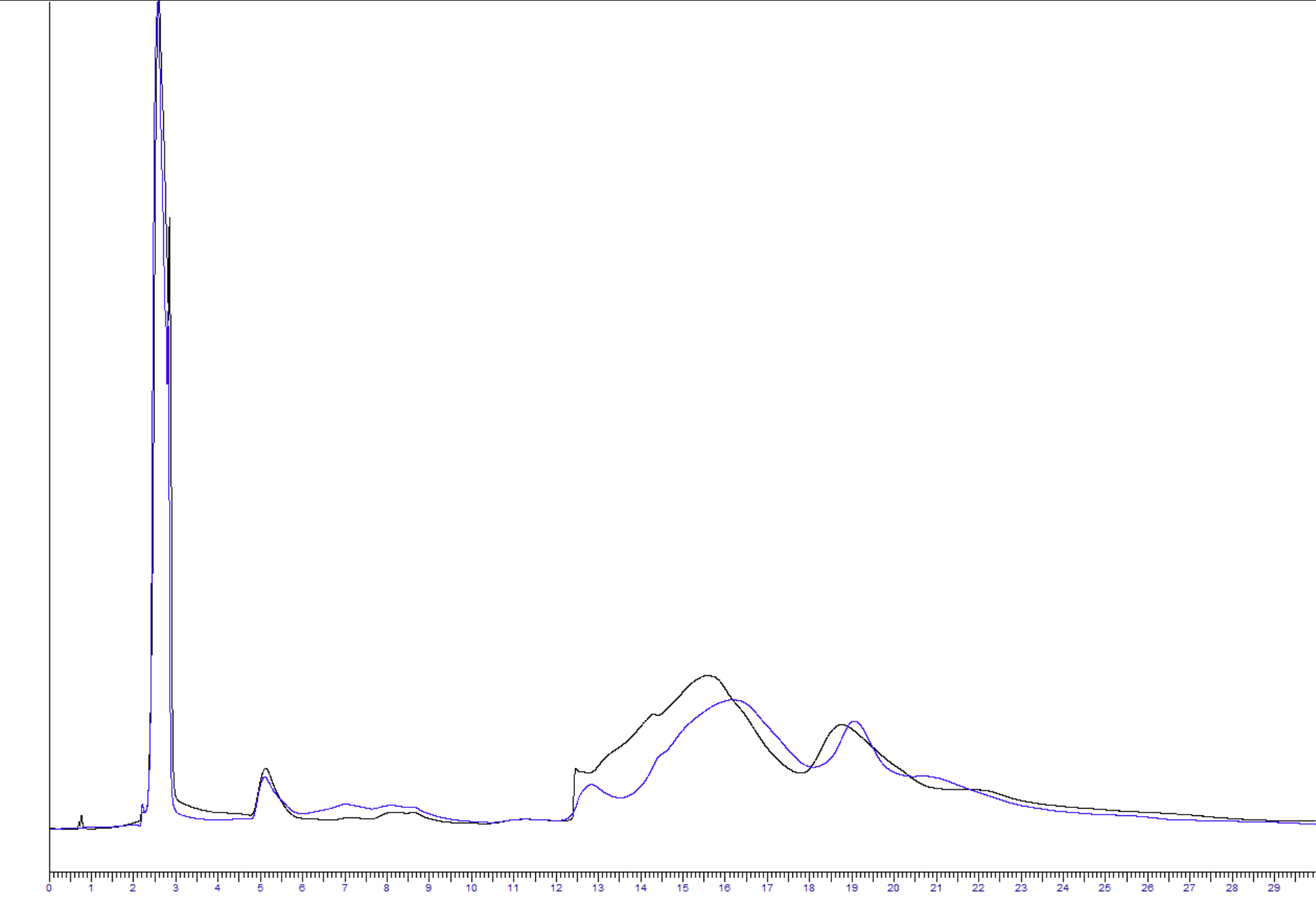
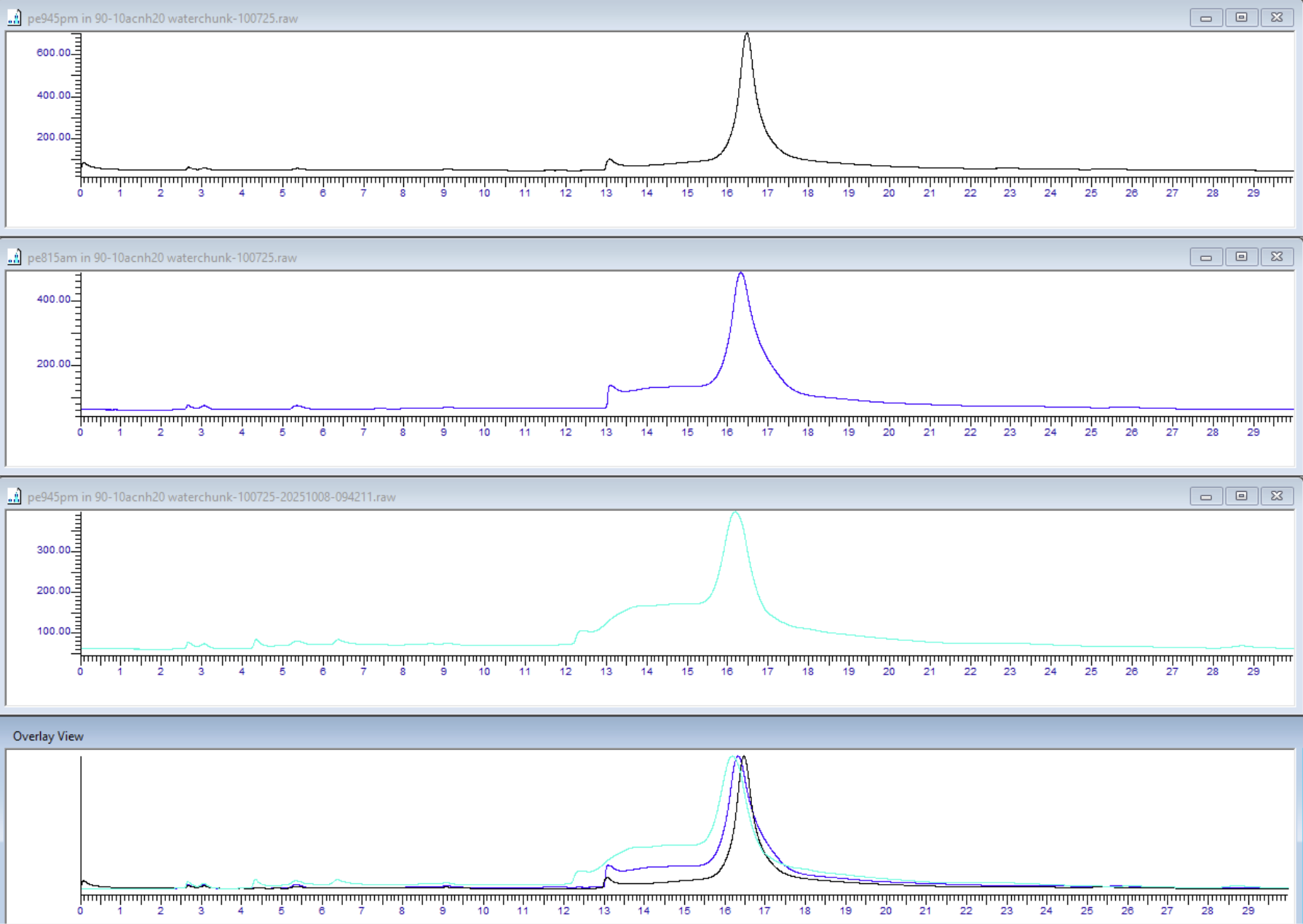
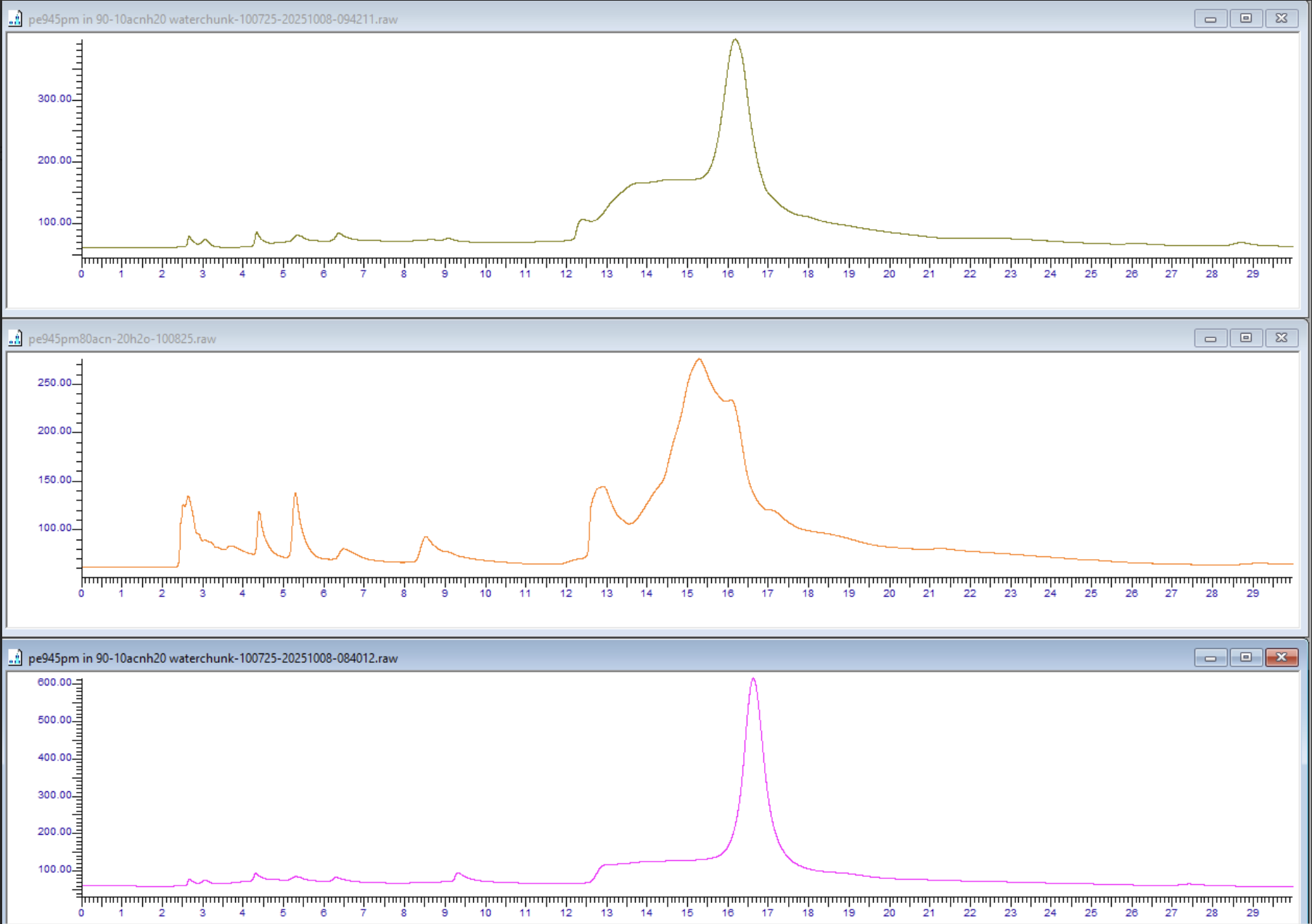
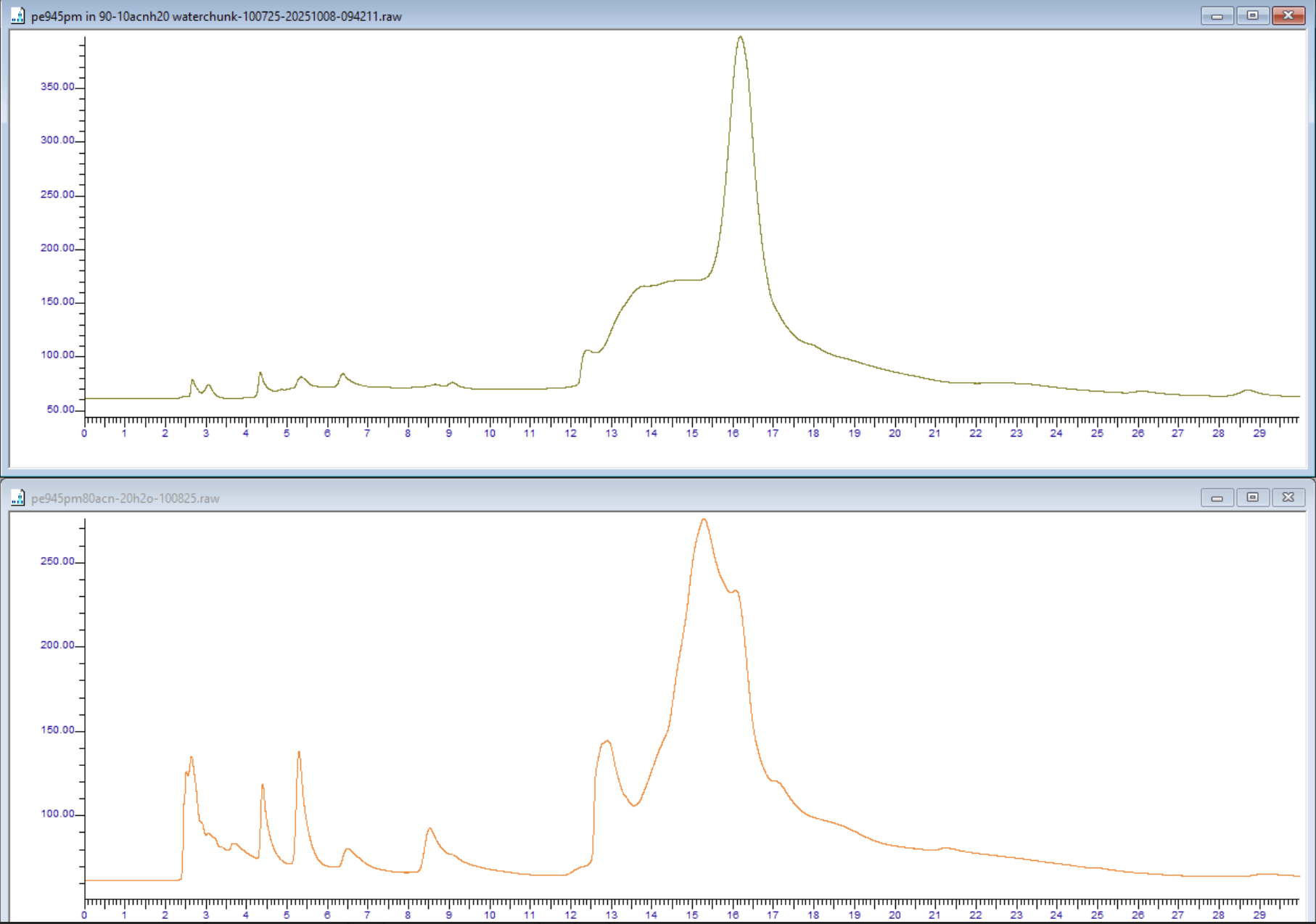
I used a Perkin Elmer HPLC to run samples and experiments throughout my internship. I set up the entire machine on my own, loaded samples, and eventually ran experiments independently. I compared results across different samples — for example, looking at a 9:45 AM batch versus an 8:15 AM batch to identify differences — and tested different solvents to observe how they affected results. I spent weeks testing solvent combinations on one project, and when that approach failed, I applied everything I had learned to new products and continued running experiments solo.
04.1.3
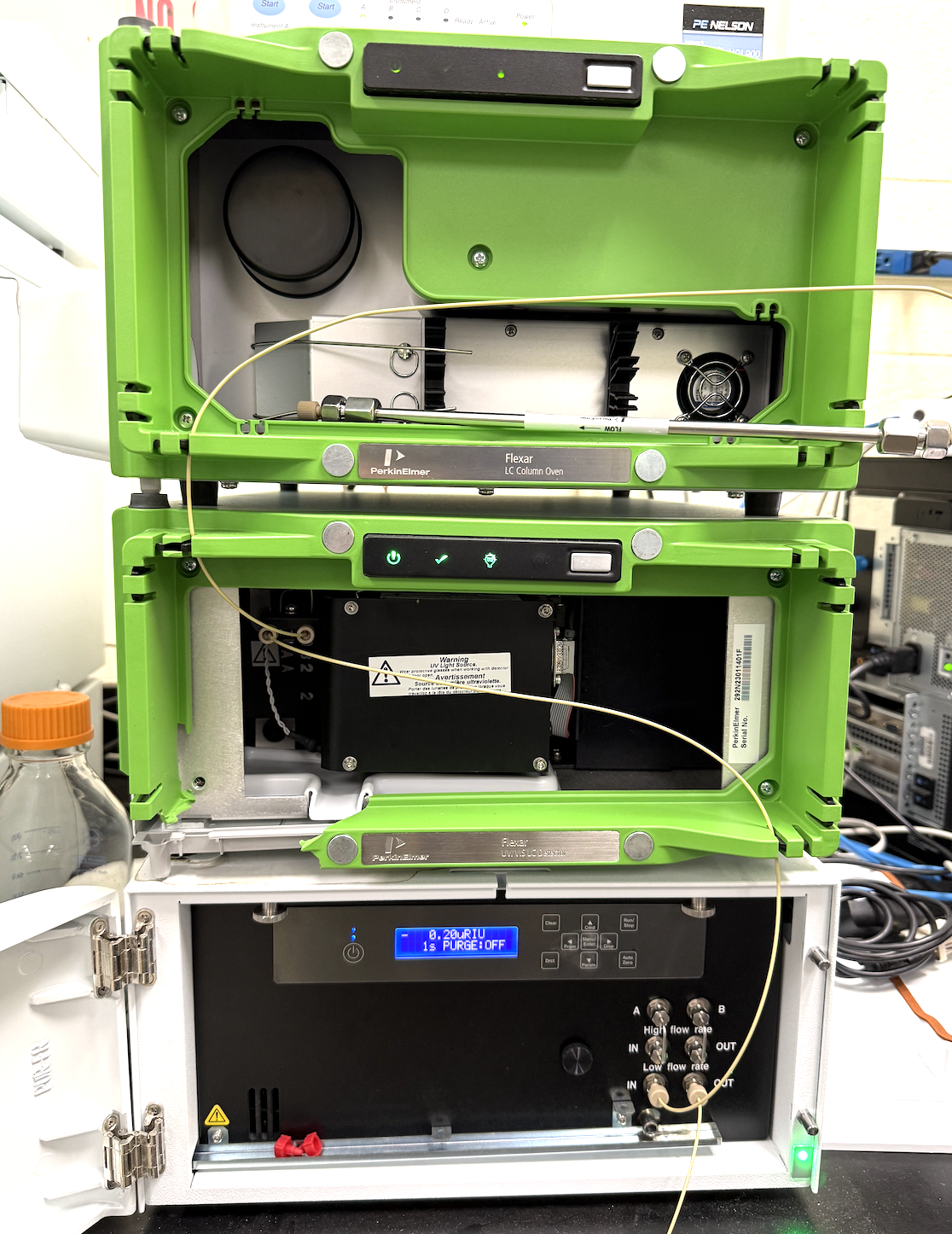
LC Machine
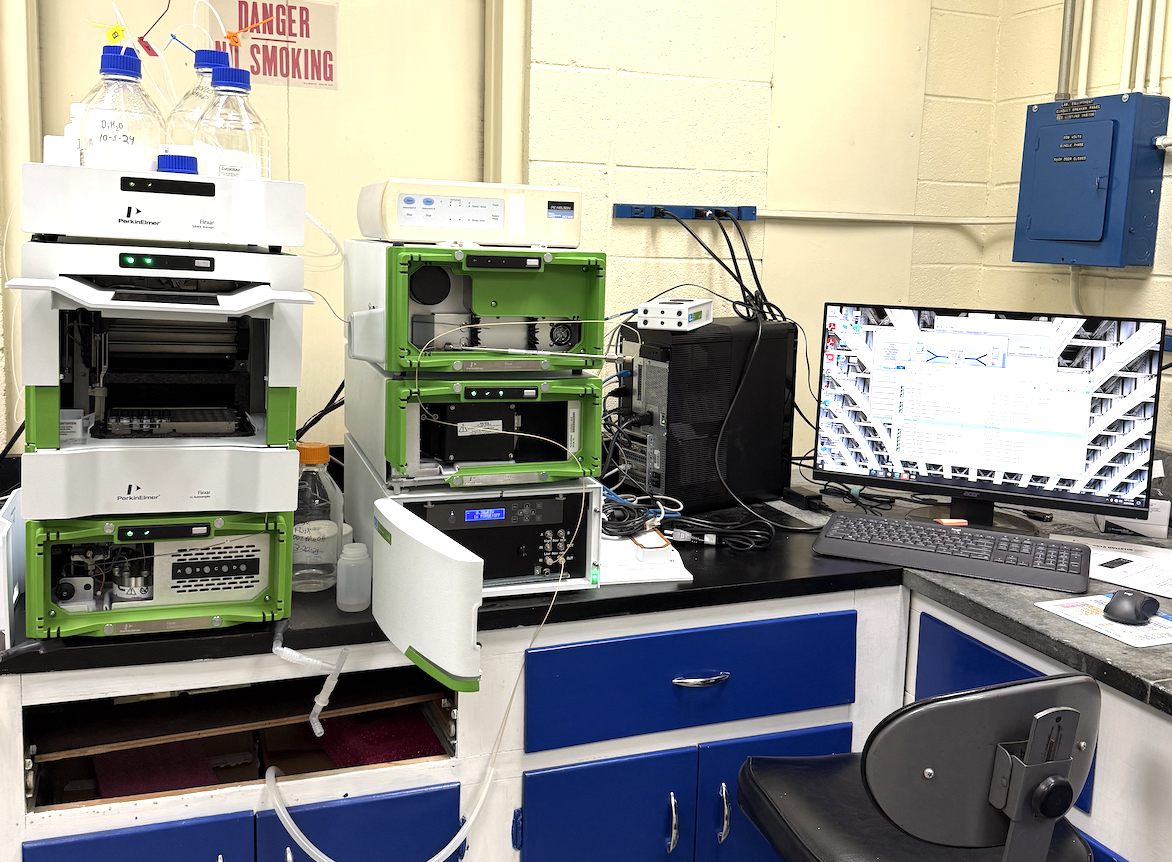
LC Work
04.1.4
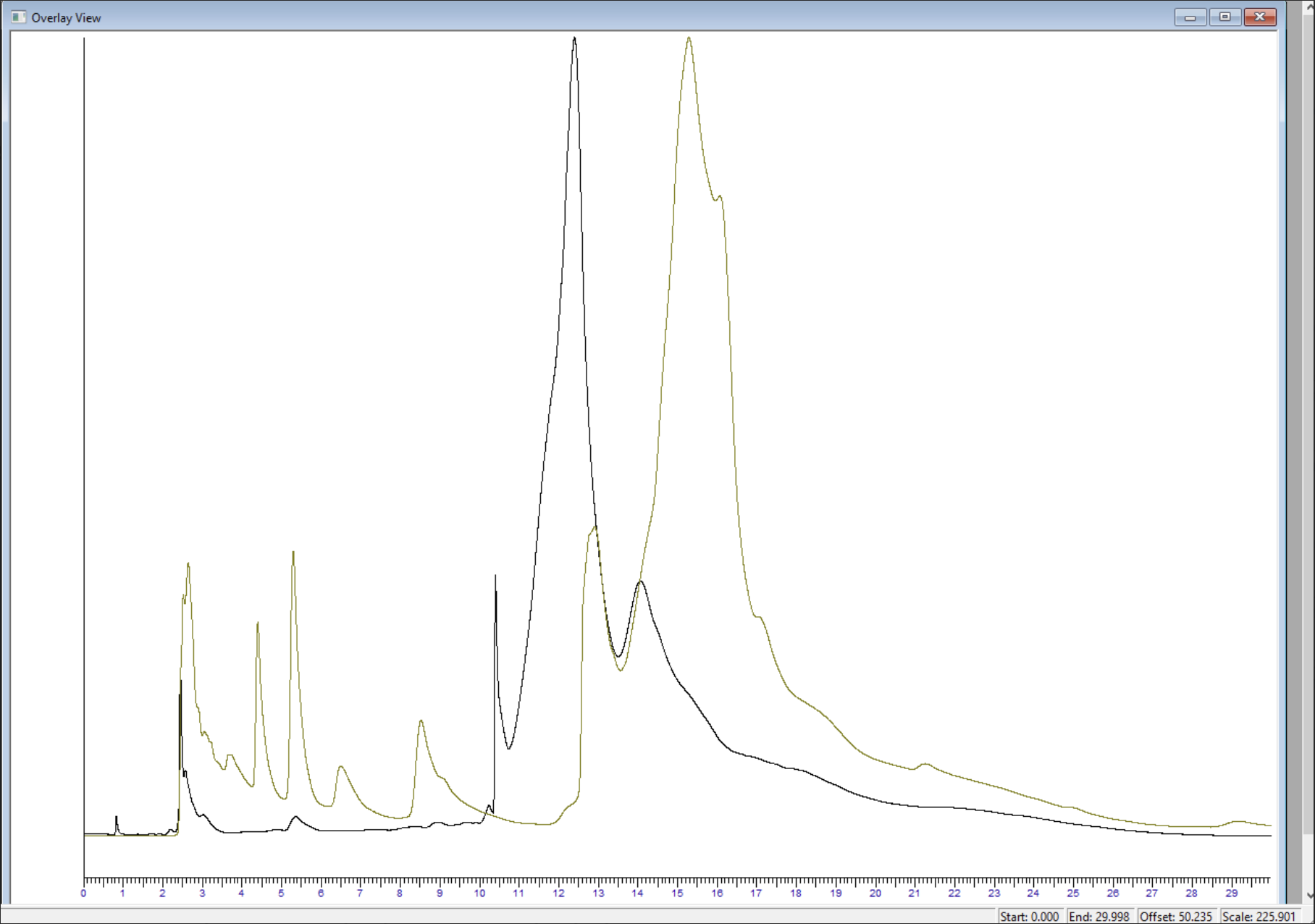
LC Graph 1
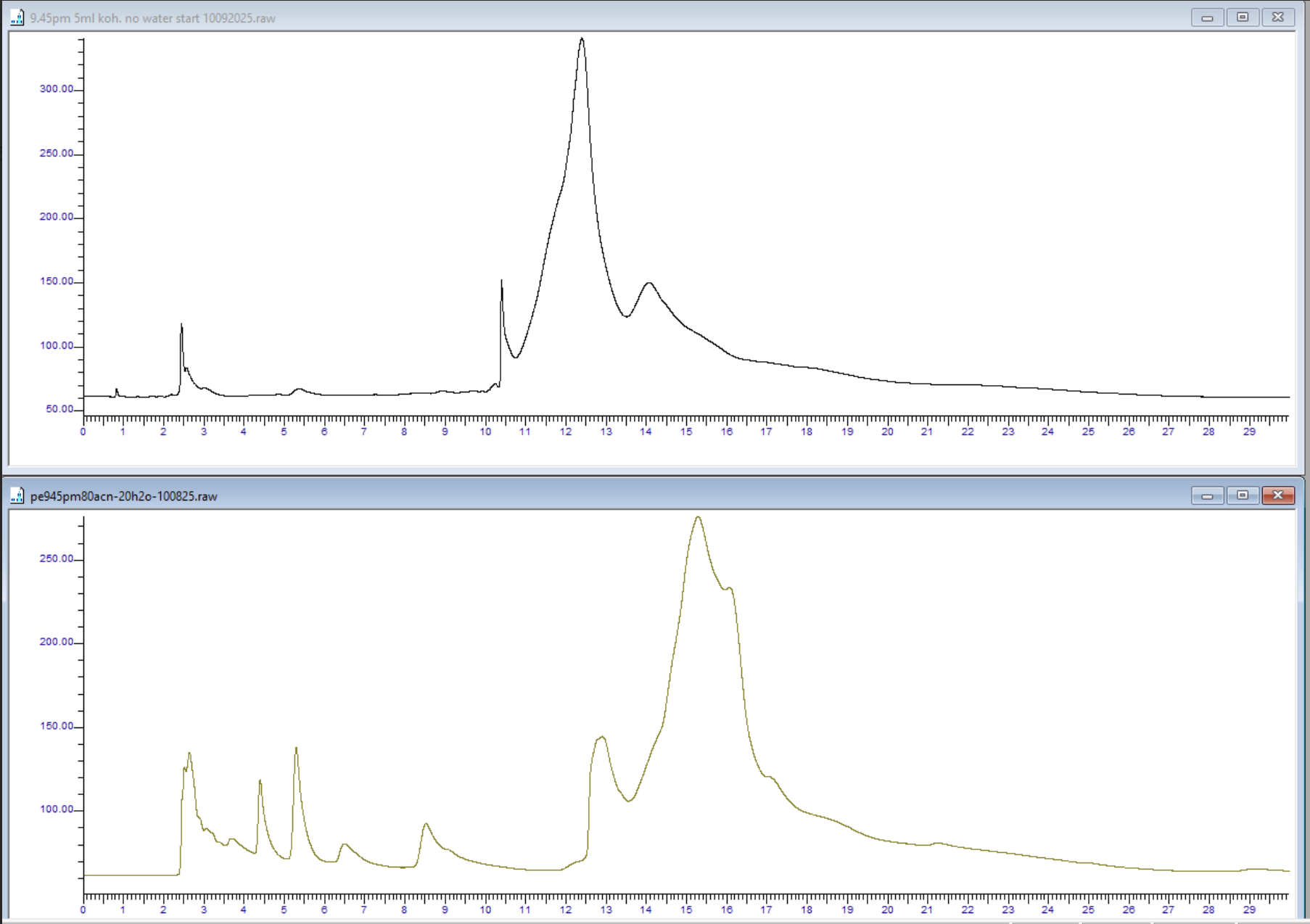
LC Graph 2
LC Graph 3
LC Graph 4
LC Graph 5
LC Graph 6