04.2.7
The refractive index detector works by using a reference cell to measure how much a sample changes the refraction of light compared to the mobile phase alone. When a component passes through the sample cell, its refraction shifts relative to the reference cell, which contains only mobile phase, and that difference is what gets detected. One key limitation of RI is that the mobile phase cannot change during a run. If it does, the sample cell and reference cell are no longer measuring the same baseline, throwing off the results. The advantage of RI is that nearly everything should be detectable, making it a broader detection method than UV-Vis.
04.2.8
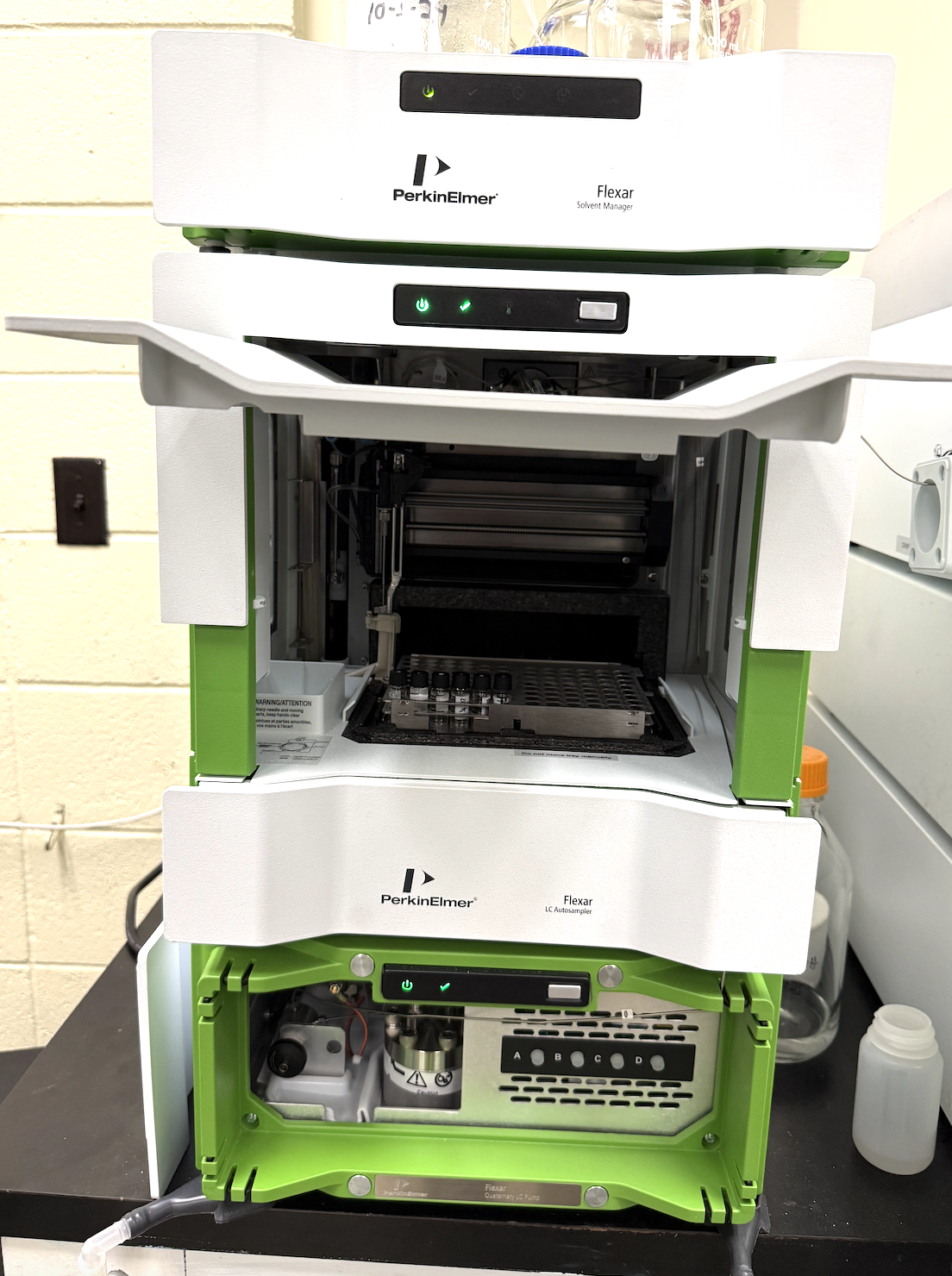
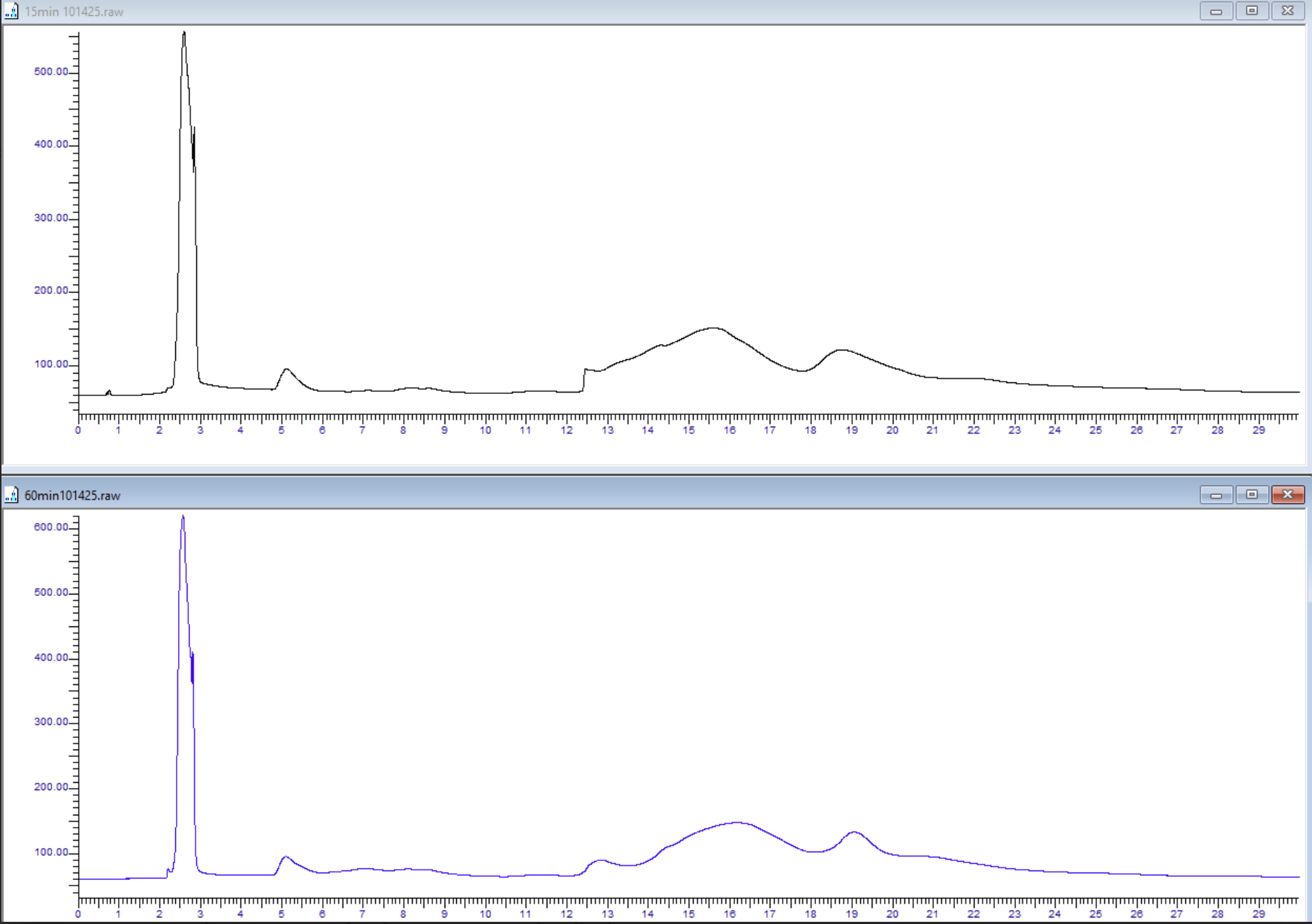
I used the RI detector to track components within samples using light refraction. Having this detection method available gave a more complete picture of what was present in a given sample and helped confirm results that other detection methods alone might not have fully captured.
04.2.9
RI Image 1
RI Image 2